Wilderness Tradeoff
Visualizing opposing views on wilderness conservation efforts.
(Year)
2025
(Services)
Posters
PERSUASIVE
& DIRECT
In the Absaroka Beartooth Wilderness, state agencies utilize helicopters to stock high mountain lakes with native trout.
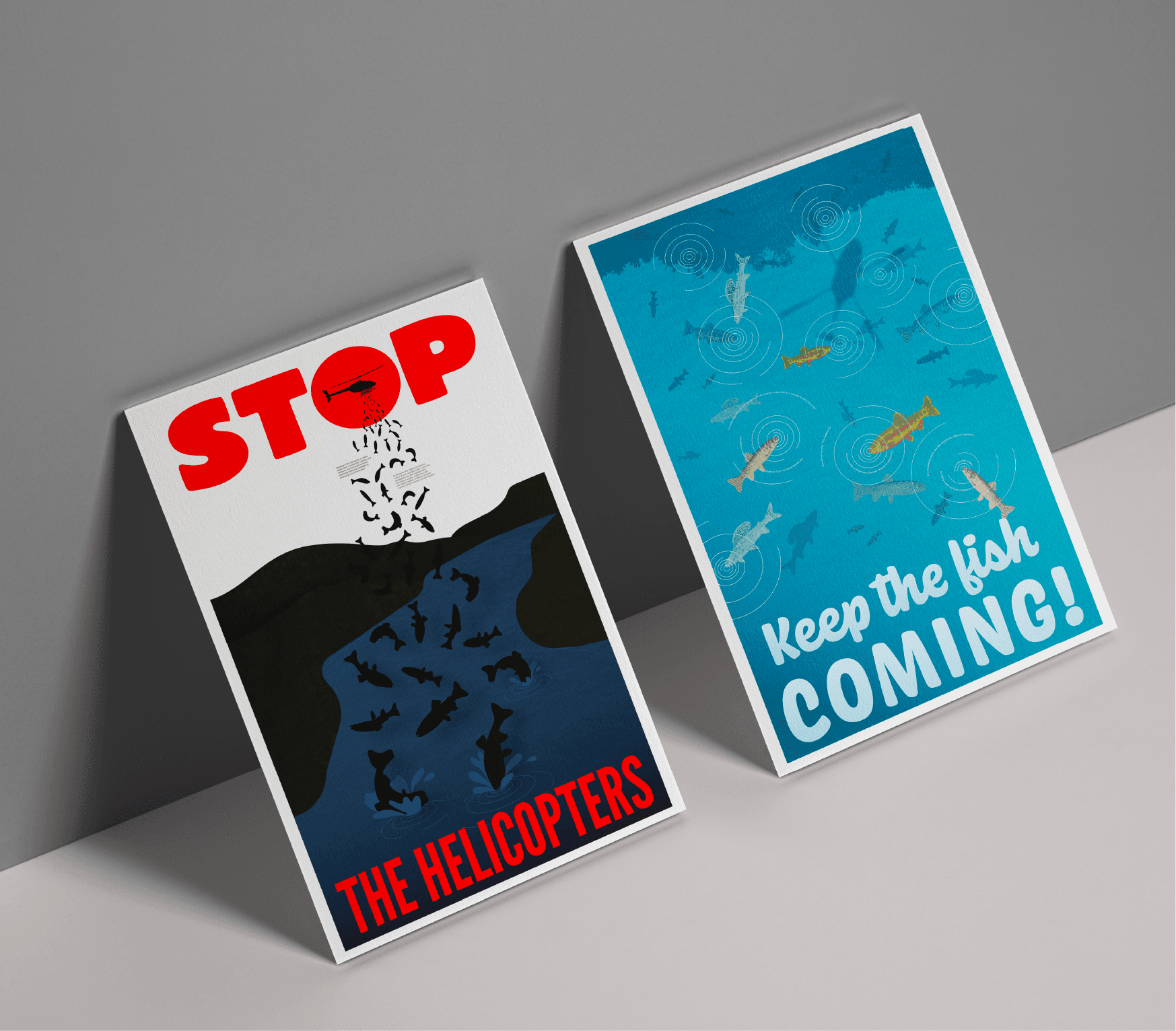
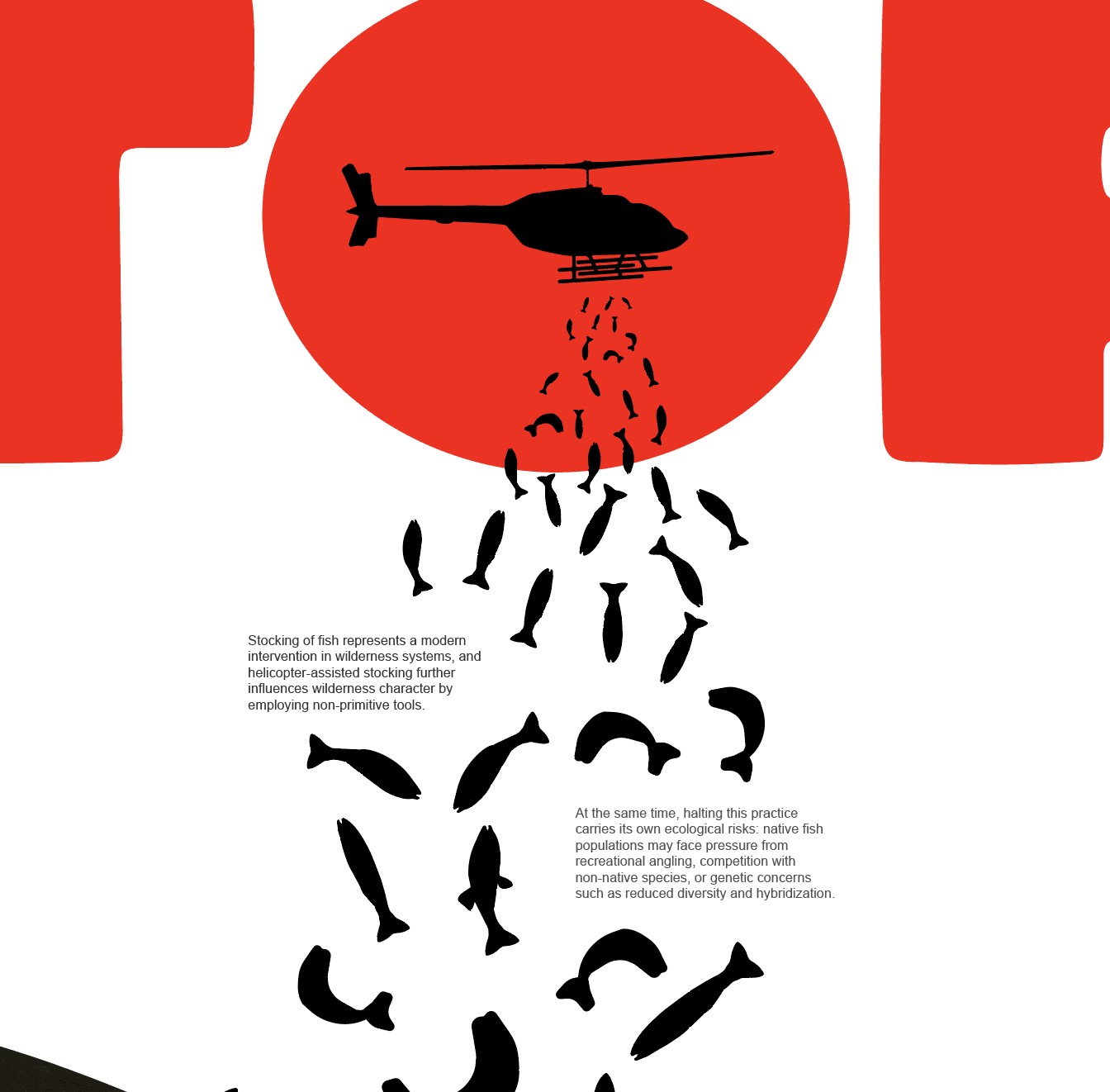
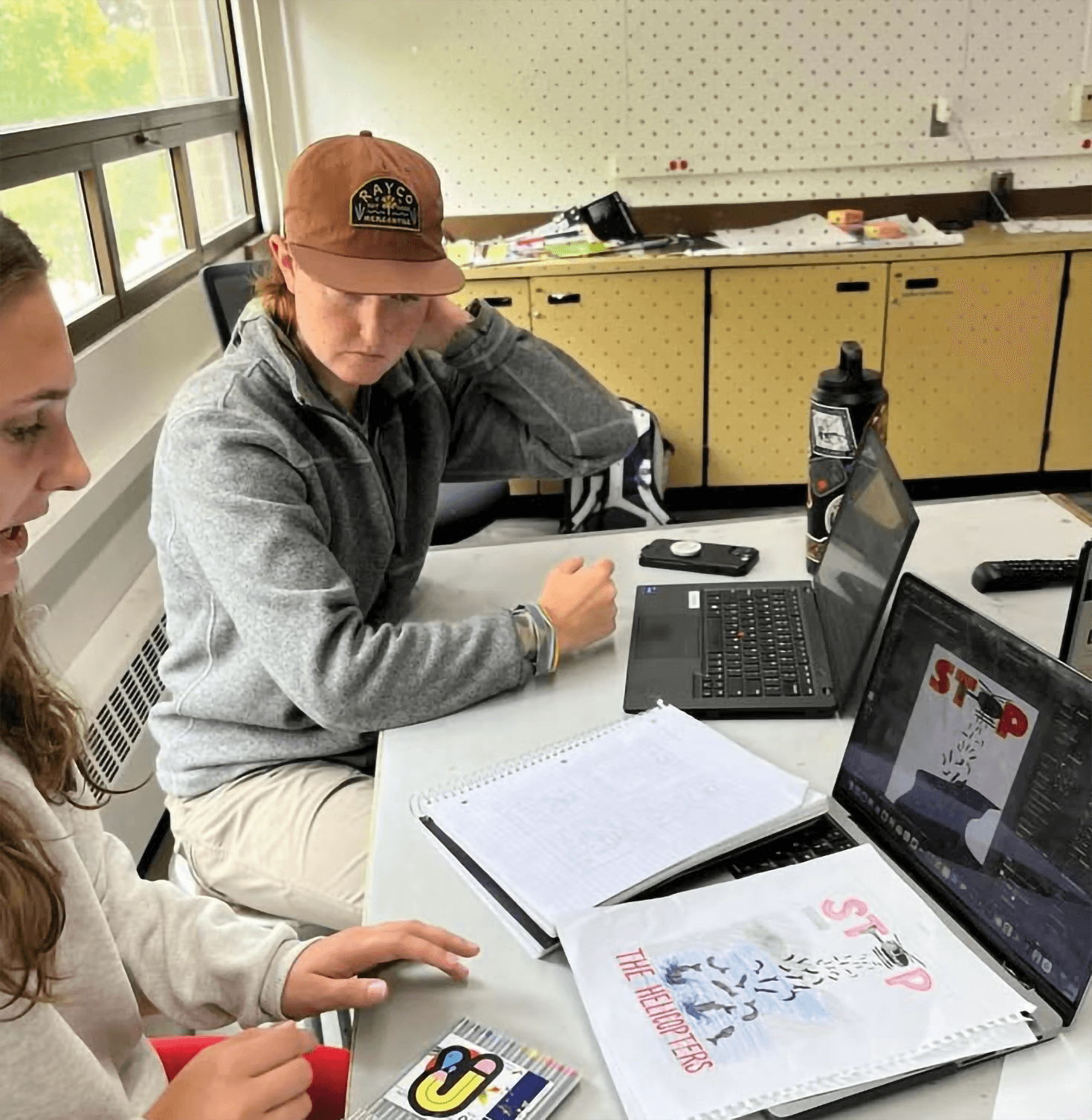
Wilderness Tradeoff is a dual-poster series examining the environmental and ethical tensions of helicopter fish stocking in the Absaroka Beartooth Wilderness. Created in collaboration with researchers from the University of Montana, Adalyn Vergara & Dr. Will Rice, the project visually communicates opposing viewpoints: one advocating to preserve wilderness by stopping helicopter intervention, and the other supporting stocking to protect native fish populations and recreation. Through information design, scientific accuracy, and visual storytelling, the posters transform complex conservation research into accessible public-facing arguments, encouraging critical reflection on human impact within protected natural spaces.
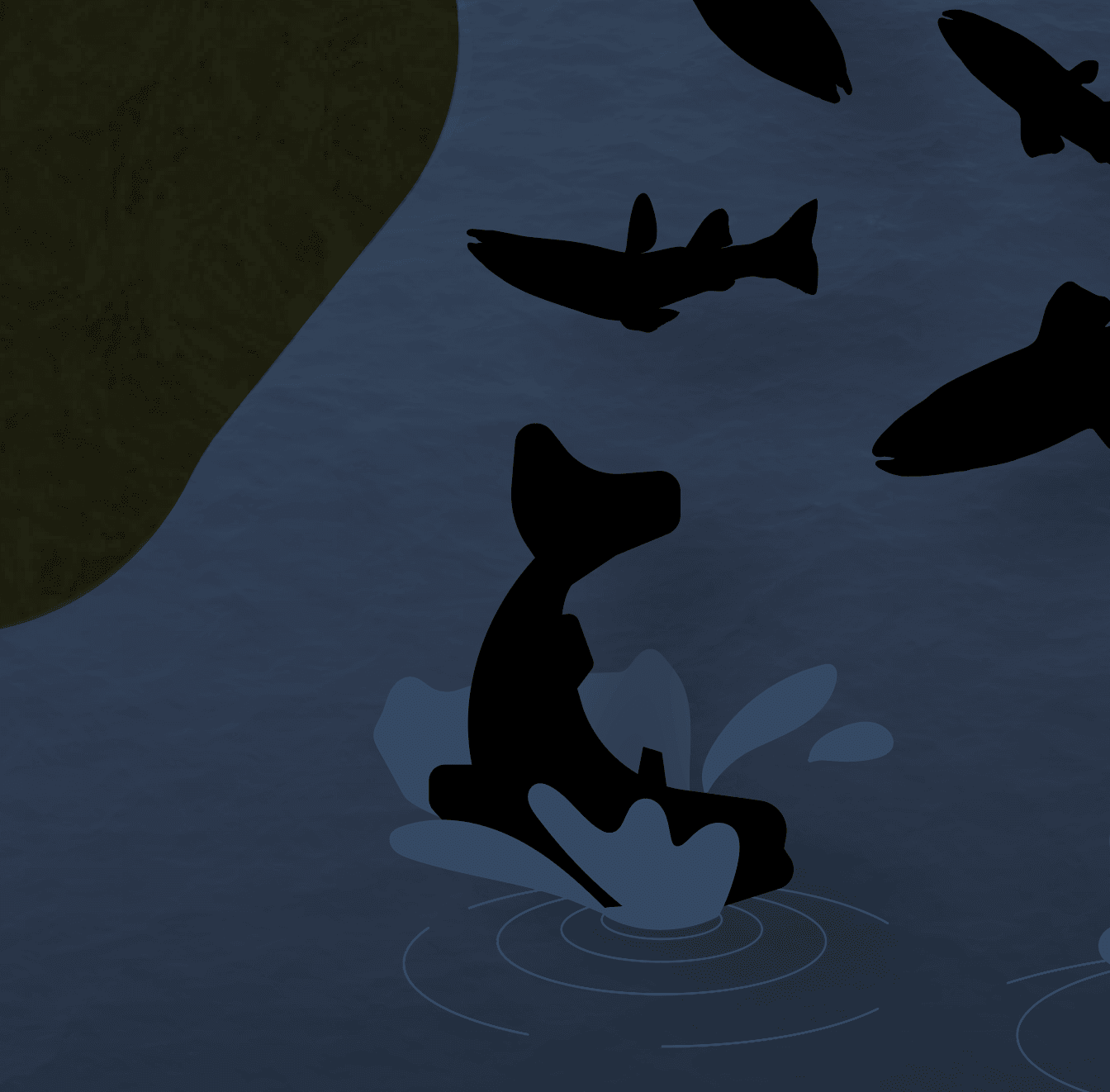
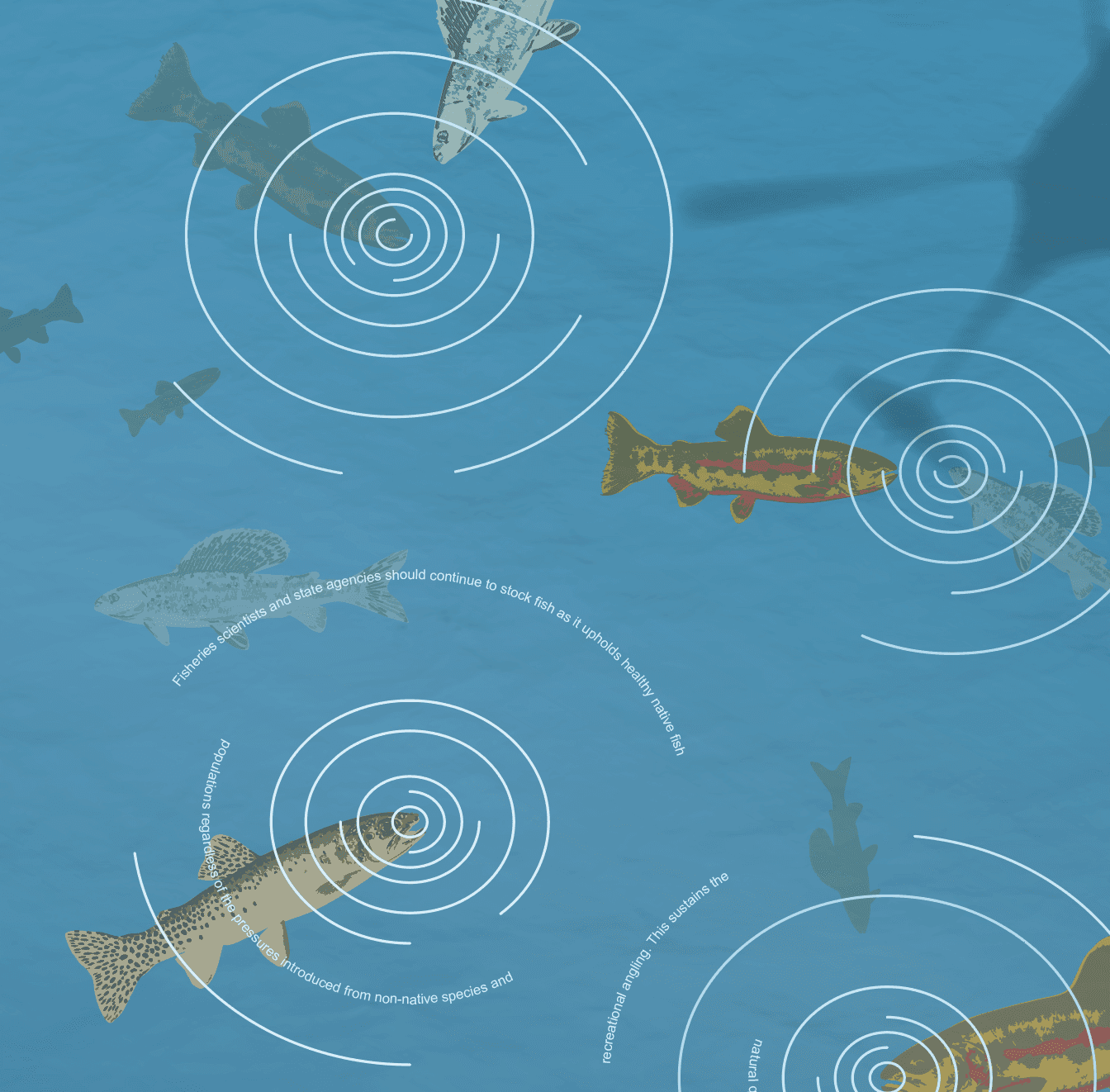
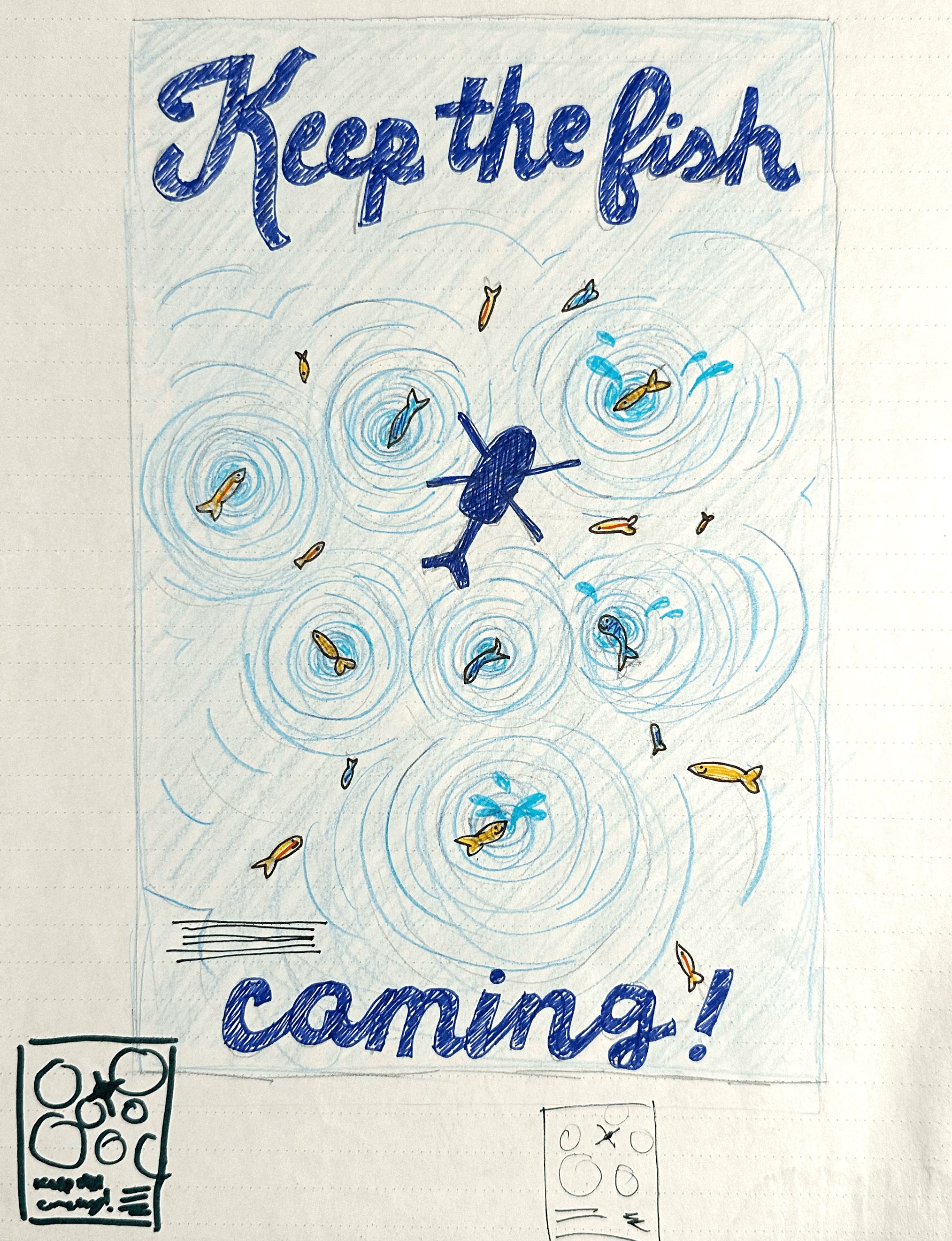
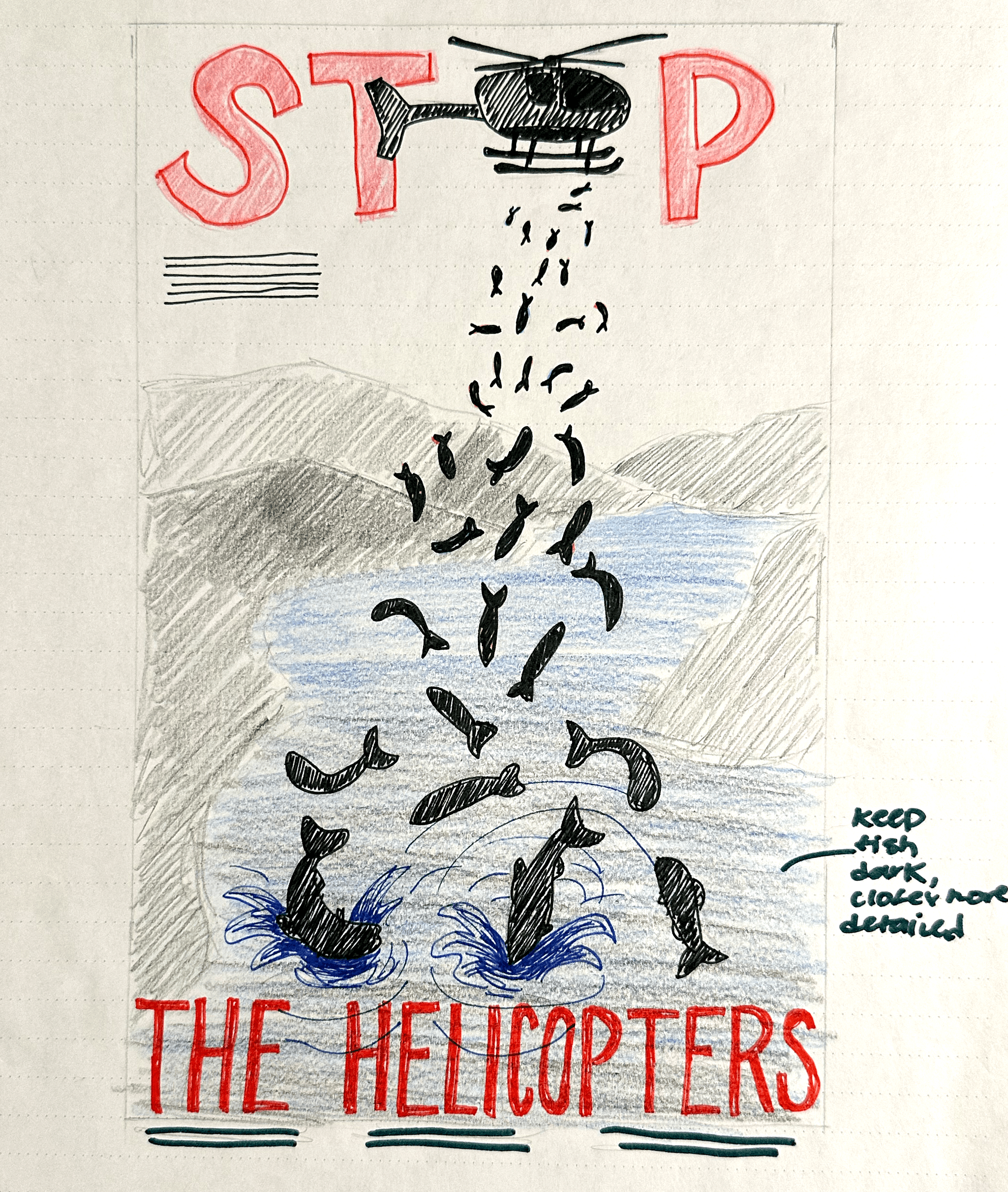
Using war posters as my visual reference for the first poster, I focused on portraying the helicopter–fish relationship as threatening and dangerous to the fish. I exaggerated the perspective to enhance the sense of drama and tension. For the opposing poster, I aimed to create the complete opposite effect: calm, serene, and environmentally harmonious. The goal of this visual was to highlight the native trout and suggest that stocking the lakes supports balance within the ecosystem. The helicopter appears only as a shadow above the lake, minimizing its presence and preventing it from becoming the focal point.

Wilderness Tradeoff
Visualizing opposing views on wilderness conservation efforts.
(Year)
2025
(Services)
Posters
PERSUASIVE
& DIRECT
In the Absaroka Beartooth Wilderness, state agencies utilize helicopters to stock high mountain lakes with native trout.
Wilderness Tradeoff is a dual-poster series examining the environmental and ethical tensions of helicopter fish stocking in the Absaroka Beartooth Wilderness. Created in collaboration with researchers from the University of Montana, Adalyn Vergara & Dr. Will Rice, the project visually communicates opposing viewpoints: one advocating to preserve wilderness by stopping helicopter intervention, and the other supporting stocking to protect native fish populations and recreation. Through information design, scientific accuracy, and visual storytelling, the posters transform complex conservation research into accessible public-facing arguments, encouraging critical reflection on human impact within protected natural spaces.
Using war posters as my visual reference for the first poster, I focused on portraying the helicopter–fish relationship as threatening and dangerous to the fish. I exaggerated the perspective to enhance the sense of drama and tension. For the opposing poster, I aimed to create the complete opposite effect: calm, serene, and environmentally harmonious. The goal of this visual was to highlight the native trout and suggest that stocking the lakes supports balance within the ecosystem. The helicopter appears only as a shadow above the lake, minimizing its presence and preventing it from becoming the focal point.
Wilderness Tradeoff
Visualizing opposing views on wilderness conservation efforts.
(Year)
2025
(Services)
Posters
PERSUASIVE
& DIRECT
In the Absaroka Beartooth Wilderness, state agencies utilize helicopters to stock high mountain lakes with native trout.
Wilderness Tradeoff is a dual-poster series examining the environmental and ethical tensions of helicopter fish stocking in the Absaroka Beartooth Wilderness. Created in collaboration with researchers from the University of Montana, Adalyn Vergara & Dr. Will Rice, the project visually communicates opposing viewpoints: one advocating to preserve wilderness by stopping helicopter intervention, and the other supporting stocking to protect native fish populations and recreation. Through information design, scientific accuracy, and visual storytelling, the posters transform complex conservation research into accessible public-facing arguments, encouraging critical reflection on human impact within protected natural spaces.
Using war posters as my visual reference for the first poster, I focused on portraying the helicopter–fish relationship as threatening and dangerous to the fish. I exaggerated the perspective to enhance the sense of drama and tension. For the opposing poster, I aimed to create the complete opposite effect: calm, serene, and environmentally harmonious. The goal of this visual was to highlight the native trout and suggest that stocking the lakes supports balance within the ecosystem. The helicopter appears only as a shadow above the lake, minimizing its presence and preventing it from becoming the focal point.